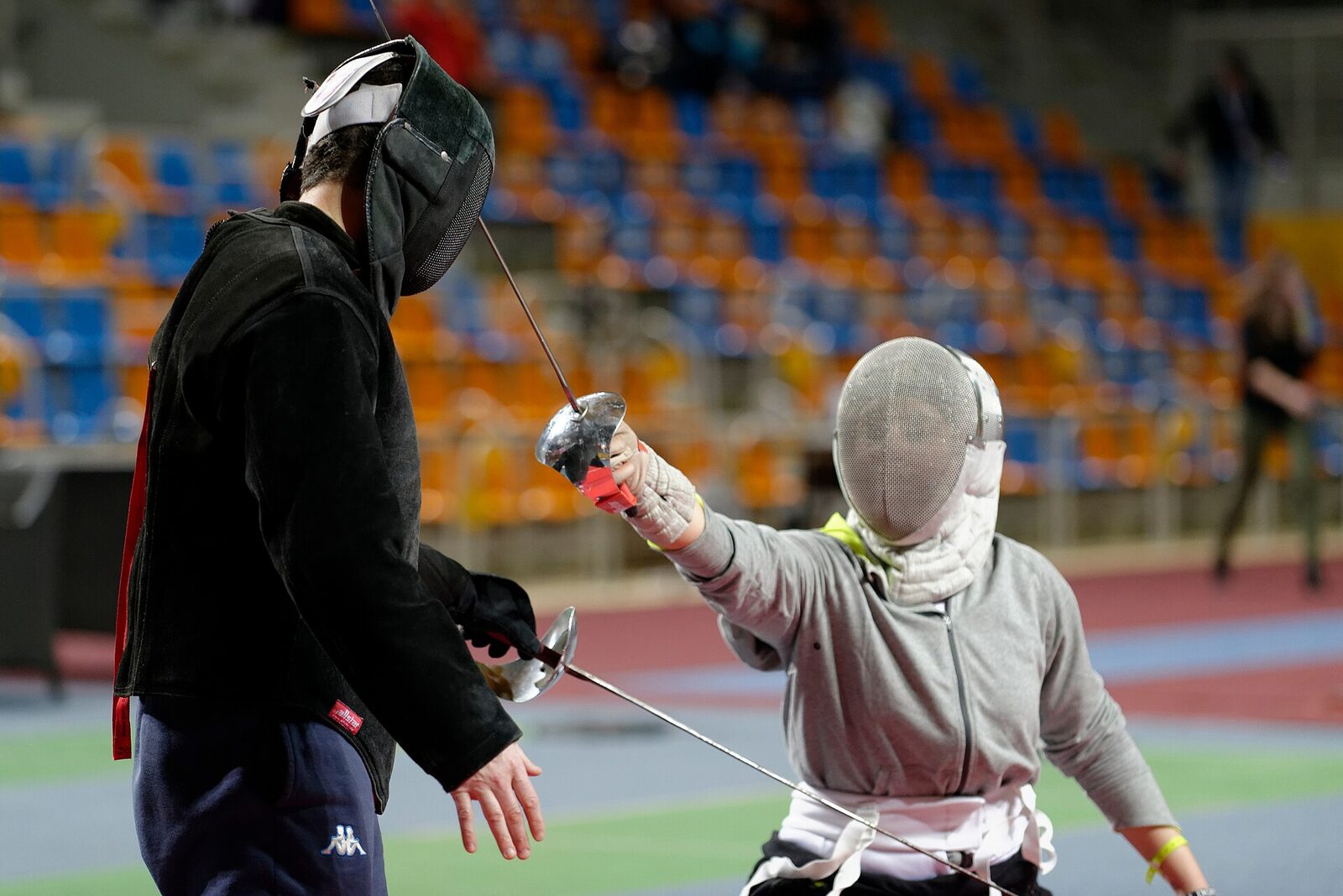
Learning To Fence: Getting Started In The Sport of Fencing
So you’re interested in learning to fence! Maybe you saw fencing on television at the last Olympics. Or you loved The Princess Bride as a kid. Either way, fencing is a sport people of all ages and abilities can enjoy. This is a quick guide from Fencing.net to help you get started on your journey in the sport. First and foremost, we have a great primer on the sport of fencing that covers what you actually saw on TV — the weapons, the rules, the scoring — but in this guide, we’re only going to talk about how to get started learning to fence yourself.
Is Fencing Right For Me?
This is a question we hear a lot in various different forms:
- Am I too old to start fencing?
- Am I too short/tall to learn fencing?
- Am I too fat/uncoordinated/un-athletic to learn fencing?
- Etc.
The answer to any of these questions is an emphatic “no.” Fencing is a very accessible sport. Anyone can get started, and we have many options for people of various physical attributes, fitness levels, and body abilities. For example, wheelchair fencing is an option and has a vibrant competitive scene. Will your physical attributes matter? At the start, yes. Someone who is very tall will find it easier to excel early in epee, for instance, or someone who is already physically fit from another sport will have an easier time because you fence better when you aren’t tired. But over time, training, tactics, and technique will outweigh latent physical advantages. As you fence more, you’ll learn how to deal with fencers who are tall, fast, strong, or short. And you’ll get fit enough to fence every point to the best of your abilities.
Age is one of the biggest sources of self-doubt, but competitive fencing has you covered: events are run in age brackets (youth divisions up through veteran brackets for older fencers) and skill brackets, so you’re rarely thrown in against a wildly mismatched opponent. That doesn’t mean it’s easy — winning at any bracket takes real work — but there’s a fair place to compete regardless of your age or experience level. Now, if you’re looking to qualify for the Olympics, then yes, you’re going to need to be quite physically fit. The top tier of the sport is highly athletic, on the same level as top-tier athletes in any other sport. It is a sport, after all.
Find a Fencing Club
Now to the getting-started part. First and foremost, your best bet is going to be finding a fencing club in your area. There are a few tools worth using together:
- USA Fencing’s official club search
- How to Find a Fencing Club — our guide to searching in the US and Canada
- An appropriate Google search
What’s the difference between these? USA Fencing’s search is the official, most complete source in the US — it’s pulled directly from actual club registrations. Its one caveat: some clubs register using the owner’s home address as their mailing address, so the pin on the map doesn’t always match where practice actually happens. Our own How to Find a Fencing Club guide walks through where to search in both the US and Canada, including province-by-province directories for Canadian fencers, since there’s no single national club list north of the border. And a plain Google search for “fencing club” plus your city works in a pinch — just make sure to include the word “club” or “lessons,” since “fencing” on its own turns up as many yard-fence contractors as it does swordfighting.
Once you find some clubs nearby, do your own secondary research. Visit their websites or Facebook pages to see where they meet for classes and practice. Sometimes clubs have satellite locations that aren’t necessarily communicated on these club lists — for example, many clubs hold classes at local recreation centers. If you’re still not sure, or you can’t find a local club through any of these, the moderators and members of r/fencing are quick to help people track down local options. Because the sport is small and tight-knit, everyone is always eager to help newcomers find their way in. But precisely because the sport is small, there might not be a convenient local club for you. This might mean you need to drive a bit if you truly want to learn the sport, so make sure to search nearby larger cities too.
Which Weapon Should I Learn First?
The answer to this question depends heavily on what your local fencing club actually offers. Some clubs specialize in a single weapon; others prefer to start new fencers on a particular one before branching out. Your best bet is to simply join your local beginner class and let your coach guide you through the process — most beginner programs are built around whatever weapon (or weapons) that club teaches. For the most part, if you stick with fencing long term, you’ll be exposed to all three weapons and figure out over time which one you like best. If you want to understand what actually separates foil, epee, and saber before you pick, our primer on the sport of fencing breaks down the target areas and scoring rules for each.
Taking a Beginner Fencing Class
You’ve found a club that looks good and is nearby. The next step is to contact that club and find out what their beginner class structure looks like. Pretty much every fencing club will have some sort of beginner class, but every club will structure these differently. Here are a few questions to ask:
- How do your beginner classes work? Can I join whenever, or is there a structured start/end date?
- Do you provide equipment for use in the beginner classes? Is it included in the cost of the class? Do I need to buy starter gear before I start?
- What are my options once I finish the beginner’s class?
- What weapons does your club specialize in, if any?
If your class requires that you buy your own gear, either you’ll be able to buy it in person, or you can read our Guide to Buying Beginner’s Fencing Equipment for what a starter kit consists of — just treat any specific prices there as historical and check current retailer listings before you buy. It’s important to ask about your options after you finish the beginner’s class, because various clubs have their own specific focuses. Some clubs only teach one of the three weapons in fencing. That’s totally fine when you’re a beginner, but over time you might find out that you enjoy one of the other weapons, so it’s worth knowing what your options are. Additionally, some clubs have more or less focus on competition. If your enjoyment of the sport is rooted in competition, but your club doesn’t offer that as an option, you’re best served by knowing that up front — and vice versa, if you don’t like the competitive aspect of the sport, there are clubs that cater primarily to the recreational angle. All good information to discover early.
And that’s it! Enjoy your first fencing class. If you have any other questions about how to get started, r/fencing is a good place to ask them (make sure to introduce yourself as a beginner), or just ask your new coach if you’ve signed up for a class. Your best bet will be to run questions by the coach at your club, since their answers will have a lot more context than what people online can give you.
Is There Anything I Can Do By Myself to Practice or Improve?
If you’re reading this guide, you’re probably a beginner, and the best thing you can do is find and take a beginner’s class — fencing is a sport that requires other people to fence with, and you won’t get that from books or videos alone. That said, if you’d like to do some work at home before or between classes, the single best thing you can do is simply get more physically fit. Jog, work out, build a basic routine, and stick to it. Fencing is a sport, so improving your physical fitness will also improve your fencing, and you’ll be less winded when it counts.
Getting-Started Resources From Fencing.net
Once you’ve got the basics down, here’s a short list of resources and content from Fencing.net to help you along your journey into the sport:
- The Fencing Coach’s Guide to Finding the Right Club
- Fencing: Safer than Badminton!
- Training for Fencing
- How to get on an NCAA Fencing Team
- Weight Training for the Competitive Fencer
- The Comprehensive Guide to Fencing Shoes
- Preventing and Treating Fencing Knee and Elbow Injuries
- A Comprehensive Guide to Fencing Masks
- How to Adjust Your Fencing Mask
- How to Clean Your Fencing Mask
- How to Clean Your Fencing Uniform
- A Primer on Fencing Rules and Refereeing